English
INTENT
Our English curriculum equips children with the tools to communicate effectively, think critically, and engage meaningfully with the world around them. Through a rich, ambitious, and inclusive English curriculum, we work in unity to ensure that every child develops the skills of reading, writing, speaking, and listening. We nurture a love of literature and storytelling, equipping children with the knowledge and confidence to embrace opportunities both within and beyond the classroom.
Our approach enables children to see themselves reflected in texts while also opening windows into the lives, cultures, and experiences of others. In doing so, we encourage empathy, respect, and understanding, preparing pupils to seek positive transformation in the world.
We teach year group appropriate spellings daily from Year 2, following a bespoke progression document; children are encouraged to understand the root meanings of the words and the pattern of letters to further support their learning. Children are expected to apply these words into their writing with confidence and accuracy.
Handwriting is taught daily with a clear progression document, ensuring that children are taught letter formation and joins at age appropriate points. Teachers have high expectations of the children’s presentation and children are expected to embed their handwriting skills and accuracy in all subject writing.
Grammar is taught daily and is planned so that it can be directly applied to the writing lesson with liked outcomes.
Children from FS, Year 1 and into Year 2 follow the Little Wandle Scheme for the teaching of phonics and reading. This is taught daily and is a highly structured, highly effective programme that supports our youngest children to read and write.
Reading for comprehension and for pleasure are taught and planned for daily. Books and texts chosen are well thought out, challenging and offer the children the opportunity to embrace the love of reading.
IMPLEMENTATION
Our English curriculum equips children with the skills to communicate effectively, think critically, and engage with the world around them. Through a rich, ambitious, and inclusive approach, we ensure every child develops reading, writing, speaking, and listening skills while nurturing a love of literature and storytelling. Children see themselves reflected in texts and are introduced to diverse lives and cultures, fostering empathy, respect, and understanding.
Phonics and early reading are taught daily through the Little Wandle programme from FS to Year 2. Spelling, grammar, and handwriting follow clear progression documents, taught daily and applied across the curriculum to secure accuracy and high standards of presentation. Reading for pleasure and comprehension is prioritised daily through carefully chosen, challenging texts that inspire a lifelong love of reading.
IMPACT
As a result of our ambitious and inclusive English curriculum, children leave our school as confident, fluent readers and writers who can express themselves with clarity and creativity. They demonstrate secure phonics knowledge, enabling them to decode and comprehend texts with increasing independence. Pupils apply accurate spelling, grammar, and handwriting consistently across all subjects, and their writing shows stamina, imagination, and purpose. Our children develop a deep love of reading and an appreciation for a wide range of literature. They can talk enthusiastically about the texts they encounter, making connections between stories, themes, and cultures. They see themselves reflected in literature and are respectful and empathetic towards experiences that differ from their own. Through high expectations, clear progression, and consistent teaching, gaps are narrowed, barriers are removed, and outcomes are high for all pupils. Children in KS1 will pass the phonics screening check, achieving 32. At least 66% of children will achieve the expected standard in reading, writing and maths by the end of KS2.
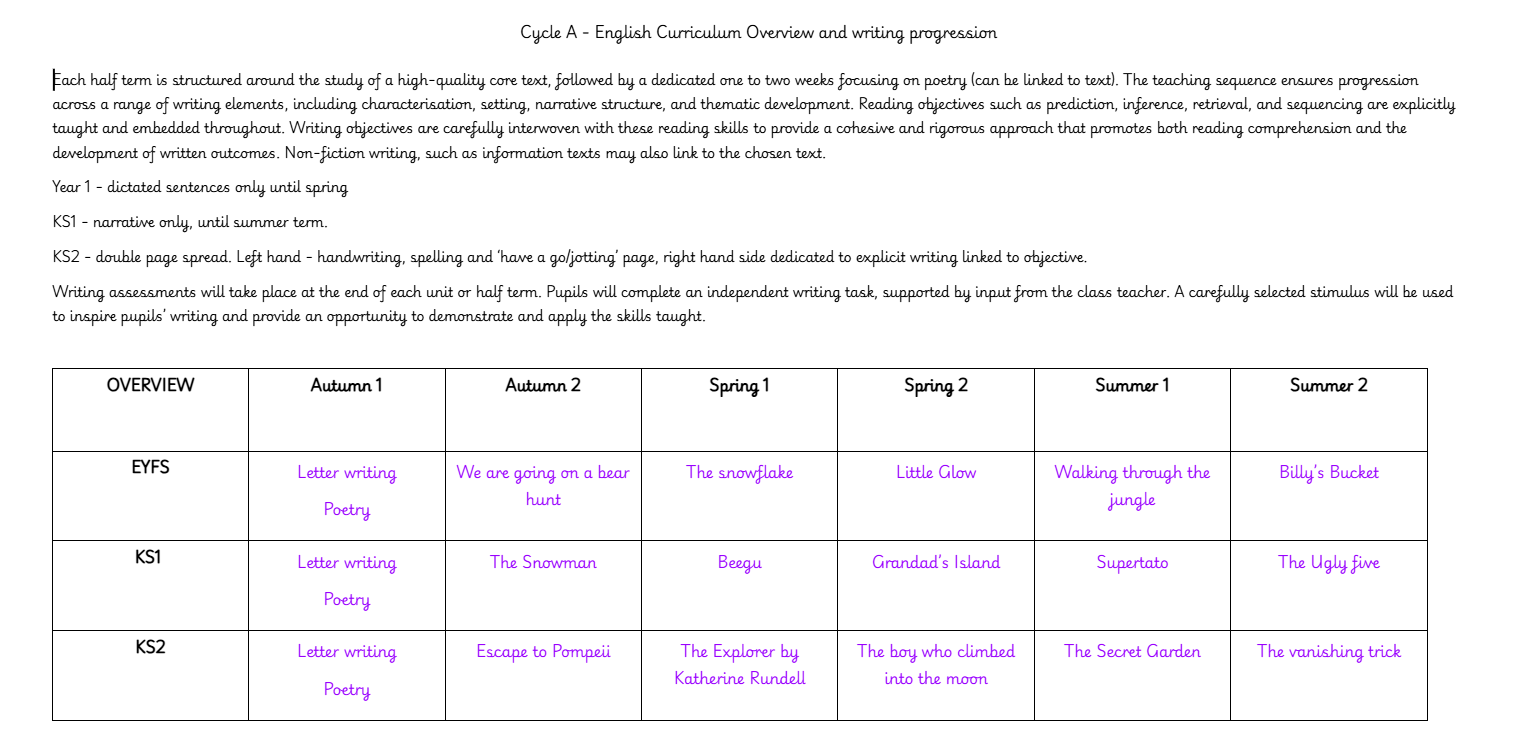
ENGLISH CURRICULUM MAP
Reading
At St Barnabas CE Primary School, we believe that reading is the gateway to children unlocking their potential. Through our Reading across the curriculum and within reading lessons, we develop fluent, thoughtful and enthusiastic readers who read with confidence, curiosity and purpose. Reading is at the heart of our school, because we know that confident readers become confident learners.
We are committed to ensuring every child develops a lifelong love of reading, enabling them to grow academically, spiritually, socially and emotionally as they discover the richness of language, literature and the wider world.
Our Reading Curriculum is built around five principles:
Read
Children develop fluency, accuracy and confidence through high-quality phonics, explicit reading instruction and daily opportunities to read a wide range of ambitious fiction, non-fiction and poetry. They hear expert reading every day and experience books that inspire wonder, imagination and curiosity.
Think
Reading develops thinking. Children learn to question, infer, predict, summarise and evaluate increasingly complex texts. Through carefully chosen literature and curriculum texts, they build knowledge, make connections and deepen their understanding of the world around them.
Speak
High-quality discussion is central to our reading curriculum. Children are encouraged to articulate their ideas, explain their thinking, debate respectfully and listen carefully to others. Rich vocabulary is explicitly taught and repeatedly explored through purposeful talk, enabling children to become confident communicators.
Write
Reading provides the foundation for excellent writing. By immersing children in ambitious vocabulary, varied sentence structures and high-quality literature, they develop the knowledge and confidence to write with creativity, precision and purpose across the curriculum.
Flourish
We want every child to leave St Barnabas as a lifelong reader who recognises the power of books to educate, inspire and transform lives. Through reading, children develop empathy, resilience, curiosity and cultural understanding. They encounter diverse voices and experiences whilst also seeing themselves reflected in literature. Reading enables our children to flourish academically and personally, preparing them for life beyond the classroom.
Our Reading Promise
Through our Reading Curriculum, every child will:
· become more fluent, accurate and confident readers;
· develop a rich and ambitious vocabulary;
· acquire knowledge across curriculum subjects through carefully chosen texts;
· think critically and discuss ideas with confidence;
· experience a diverse range of authors, cultures and perspectives;
· develop resilience when tackling challenging texts;
· read daily for both learning and pleasure;
· understand that reading opens doors to opportunity throughout their lives.
The reading curriculum has reading for purpose built into all learning. Units of work have a high-quality, age-appropriate driving text assigned. These texts are carefully selected to engage, inspire and deepen understanding. Alongside this, supplementary texts and bespoke knowledge organisers enable pupils to enrich their knowledge, subject-specific vocabulary and curriculum skills. Every reading session includes reading for purpose, from either the driving book or a supplementary text. Pupils then use this as a stimulus to discuss new knowledge, deepen their enquiry skills and form links in their learning. We encourage pupils to develop a love of reading so that they become life-long readers. It is our aim to ensure that pupils become fluent readers as early as possible. We recognise how crucial this is for pupils to be able to access all areas of the curriculum.
Children take part in specific reading sessions each day; 45 minute reading lesson and a 15-minute story session. The reading lessons begin with 3-minute rapid retrieval questions from text read the previous day. This is followed by introducing 5 or 6 new ambitious vocabulary words named the ‘greenhouse words.’ Adults model read to the pupils while they track and jump in with the new vocabulary words when they occur in the text. There are key questions to explore and discuss together while the pupils read in a variety of ways such as; echo reading, choral reading ping-pong or paired reading. The pupils often have a written task to complete which focuses on the key question. Students also read across the curriculum throughout the day and take part in library sessions.
We have invested in re-stocking the home-reading books with Collins Cat books, in order to ensure that all pupils have an appropriate text to help develop their reading fluency. Each classroom has been provided with age appropriate books for reading for pleasure. In addition to this, we have invested in additional Little Wandle books to ensure pupils in Key Stage 1 are taking home a phonetically decodable book that is matched to their reading ability. Our intent is that no child should leave our school without being able to read.
We listen to the pupils read regularly and they are then encouraged to read aloud to an adult at home at least three times a week. This is to help reinforce their word recognition; improve their fluency and confidence; and share their love of reading with siblings and parents, which pupils record in their reading diaries. We reward pupils who read at home with ‘regular reading’ rewards. For each twenty-five reads, pupils can choose a prize from the reading prize box. Those who have read 3 times or more each week have their name drawn out for a golden ticket and share their favourite book with the Headteacher whilst enjoying hot chocolate or milkshakes. We acknowledge that not all pupils will have the opportunity to read at home. Therefore, we ensure these pupils are listened to as often as possible within school.
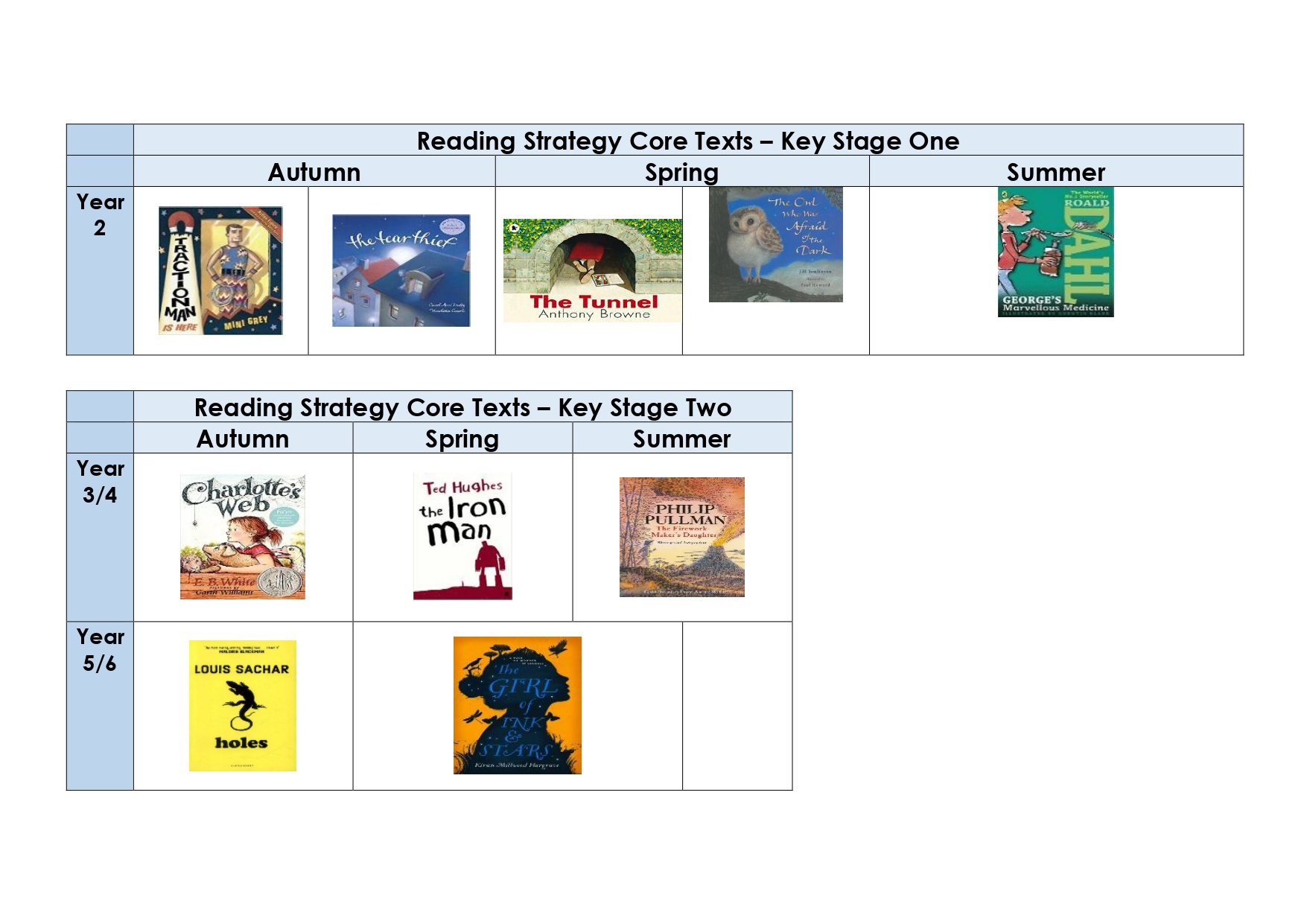
- Overview and Progression
- Reading Progression
- Progression in Non-Fiction
- Progression in Narrative Text
Recommended books for your child
'Today a reader, Tomorrow a leader' Margaret Fuller
- Recommend Reads